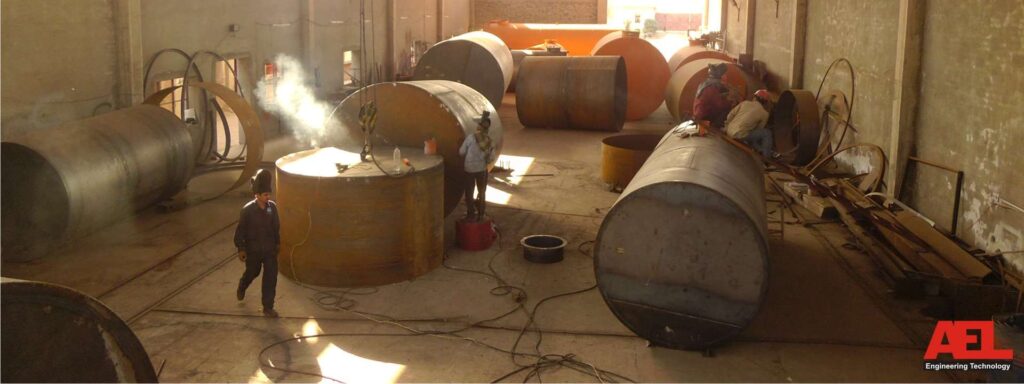
- Most tank failures start with installation mistakes, not with the tank itself.
- Test the tank before and after it goes into the ground.
- Plan for groundwater: an empty tank can float.
An underground fuel tank is expected to sit out of sight for decades. Once it is buried, every shortcut taken during installation becomes expensive to fix. This checklist covers the steps we follow and recommend for fuel stations, generators and industrial storage.
Before excavation
- Confirm the approved layout, tank capacities and compartment arrangement with the oil marketing company or client.
- Review the soil report and the groundwater level, including seasonal rise during monsoon.
- Check minimum distances from boundaries, buildings and other services required by the approving authorities.
- Inspect the tank on delivery: coating condition, nameplate, fittings and test certificate.
Excavation and bedding
- Excavate with safe side slopes or shoring; never send workers into an unsupported trench.
- Provide a level, compacted bed of clean sand or the bedding material specified by the tank designer.
- Keep sharp stones and debris away from the tank shell to protect the coating.
Anchoring against flotation
Where groundwater is high, buoyancy can lift an empty tank out of the ground. Tanks are held down with a concrete deadman or base slab and hold-down straps, insulated from the shell so the coating is not damaged. The design should check flotation with the tank empty and groundwater at its highest level.
Testing
- Before burial: air pressure test of each compartment, with soap solution on welds and fittings.
- Double skin tanks: test the interstitial space as well, and confirm the leak monitoring arrangement works. See single vs double skin tanks.
- Coating: holiday test the external coating and repair any defects before lowering.
Lowering and backfill
- Lift with spreader beams at the designated lifting lugs, never with chains around the shell.
- Backfill in layers with the specified material, compacting evenly on both sides so the tank is not pushed off line.
- Fill around fittings carefully and keep manholes, fill pipes and vents aligned with the forecourt design.
Piping and fittings
- Slope suction or pressure lines back towards the tank as designed.
- Install vent pipes to the required height away from openings and ignition sources.
- Fit spill containment at fill points and overfill protection.
- Pressure test the pipework before it is covered.
Handover records
Keep the tank test certificates, coating inspection results, backfill photos, piping test records and as-built drawings. These records help with approvals, insurance and any future inspection.
Apex Engineers has manufactured fuel tanks since 2000 and double skin tanks since 2002, and installs them as part of complete fuel storage tank packages. Ask for a tank and installation quote.

Written by the Apex Engineers team
Engineers and fabricators at Apex Engineers (Pvt.) Limited, building fuel stations, storage tanks, steel structures, towers and road safety systems from our Lahore manufacturing facility since 1992. About us
Related articles
 Fuel stations & tanks
Petrol Pump Construction Cost in Pakistan: What Drives the Budget
Read article Fuel stations & tanks
What a Complete Fuel Station Package Includes in Pakistan
Read article Fuel stations & tanks