Every fuel station and generator site needs somewhere safe to store fuel below ground. The first decision is usually whether to buy a single skin or a double skin tank. Both can do the job, but they offer different levels of protection, and the right choice depends on the site, the product stored and what your client or oil company requires.
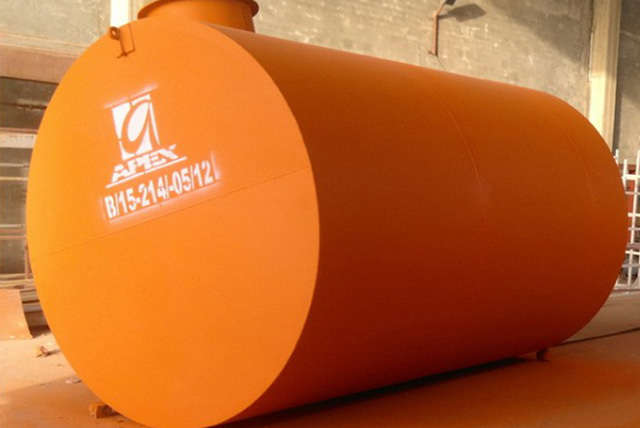
What is a single skin tank?
A single skin tank has one steel wall. It is protected from the soil by an external coating, such as GRP, epoxy, polyurethane or bitumen. When the steel, welding and coating are done properly, a single skin tank gives many years of service, and it costs less than a double skin tank of the same capacity.
The weakness is that there is only one barrier between the fuel and the ground. If that wall is damaged, for example by poor backfill or coating damage during installation, a leak may not be noticed until fuel losses or contamination show up.
What is a double skin tank?
A double skin tank has a primary inner tank and a secondary outer shell, with a small space between them called the interstitial space. If the inner tank leaks, the outer shell contains the fuel. If the outer shell is damaged, the inner tank keeps the fuel in.
The interstitial space can be monitored. One common method keeps the space under a small pressure. If either skin is breached, the pressure drops and an alarm is raised before fuel reaches the soil.
How to choose
- Environmental sensitivity. Near wells, rivers, high water tables or housing, a double skin tank with leak detection is the safer choice.
- Client or brand requirements. Many oil marketing companies and international clients specify double skin tanks for new stations.
- Product and service life. For long design lives, the extra protection usually pays for itself.
- Budget. Where regulations and the client allow it, a well coated single skin tank can be a sound, economical option.
What to check whichever you choose
Ask the manufacturer which standard the tank is built to. Apex builds underground tanks to BS EN 12285-1. Check how seams are welded; submerged arc welding inside and out gives consistent penetration. Ask about surface preparation, which should be blast cleaning to around Sa 2.5 before coating, and make sure every tank is pressure tested and the coating holiday tested before dispatch.
Summary
Single skin tanks are economical and reliable when well built and installed. Double skin tanks add a second barrier and allow continuous leak monitoring, which is why they are increasingly the default for fuel stations. If you are unsure, send us the site location, product and capacity and we will recommend the right construction.
See our fuel storage tanks or request a tank quotation.

Written by the Apex Engineers team
Engineers and fabricators at Apex Engineers (Pvt.) Limited, building fuel stations, storage tanks, steel structures, towers and road safety systems from our Lahore manufacturing facility since 1992. About us
Related articles
 Fuel stations & tanks
Underground Fuel Tank Installation: A Site Checklist
Read article Fuel stations & tanks
Petrol Pump Construction Cost in Pakistan: What Drives the Budget
Read article Fuel stations & tanks